

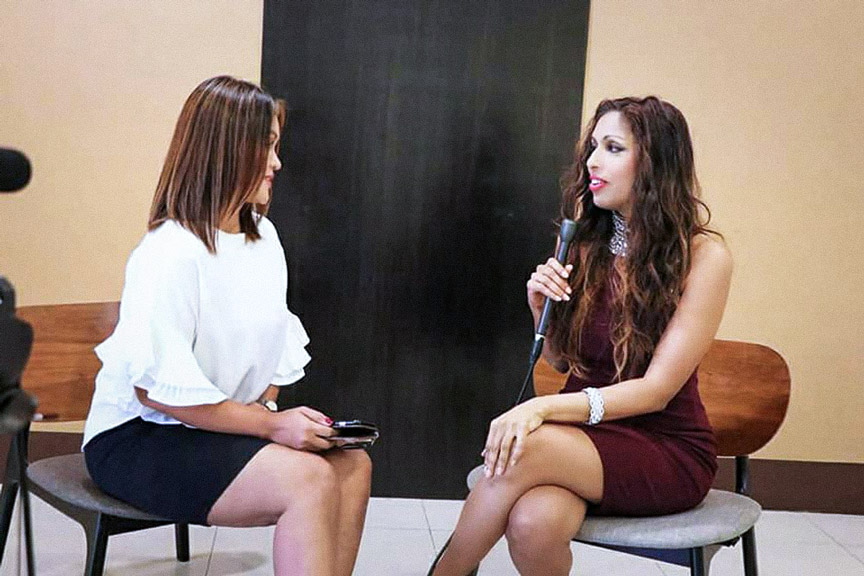
Ria Persad is the President, European Chamber of Digital Commerce | Founder & CEO, StatWeather | Fellow, Cambridge Commonwealth Society | Former Mathematical Modeler and Space Scientist at NASA | Subject Matter Expert in predictive modeling, Defense Space Systems for U.S. Department of Defense, U.S. Air Force, U.S. Navy, and NASA Aerospace projects | Harvard Scholar
Aspirations Intelligence recently caught up with Ria. We learned from Ria the impact of the emergence of intelligent systems in science and how it has opened new entrepreneurial opportunities. We also discussed how intelligence-driven technologies and advanced systems have transformed science and opened up new possibilities.
Ria: As a child, I heard about NASA and people going to the moon. It was exciting. So, I read every book I could get my hands on about the universe and studied mathematics. When I turned 23, I was actually working at NASA. Today, at my company StatWeather, we predict weather and climate patterns using artificial intelligence.
Today, I combine my knowledge of mathematics with atmospheric and environmental science. I’m doing everything I dreamed of doing as a 5-year-old. Back then we only had very simple computers. But in the 1990’s we started seeing very high-performance computers.
They transformed the face of science and mathematics. We can now build systems that can analyze millions of data points. It allows us to give accurate long-term forecasts for anywhere on Earth. The intelligence driven transformation allows us to predict things we couldn’t before.
The future of Intelligence is changing entire industries. For example, in risk management, we can now predict the impact of disasters. That helps us become more resilient as a society. The rise of intelligence driven technology has given great power to science.
Ria: When I was working in the energy industry and at NASA, I saw how the weather was a big part of the equation. But in the 1990’s we had very limited technologies. I had to go to the weather center and get hard copies of the data. Then I had to manually analyze it. But in just a few years, intelligent digital connectivity transformed access to information.
Suddenly, you could find all this data online. Even today, there’s a lot of open data ecosystems. You can download geographical data, weather data, even data about diseases. For a mathematician like myself, it’s like being a kid in a candy store! So, I ended up going into consulting and creating my own job with this data.
I believe that with intelligence driven transformation if you have the skills and creativity to use this data, then you have an incredible opportunity. Interestingly, there was a time in the United States when it was difficult to get a job in the government sector due to budget cuts. But now we have entrepreneurial outlets thanks to all this data. So, I don’t need the government to give me a job.
However nowadays, it’s hard to keep a steady job. I used to work at Enron. One day it shut down due to corruption. When Enron went down, they took a lot of companies down with them. It ended up affecting the entire job market. Due to instances like that, recessions, and other shocks, it’s hard to keep a job. It’s not your fault.
Yet, thanks to the intelligence era, I believe everyone can be an equal player. The evolution of intelligent technologies has leveled the playing field. So, it doesn’t matter where you are in the world. All you need to have is intellectual capital. All of us can take part in the marketplace and opportunities to be an entrepreneur.
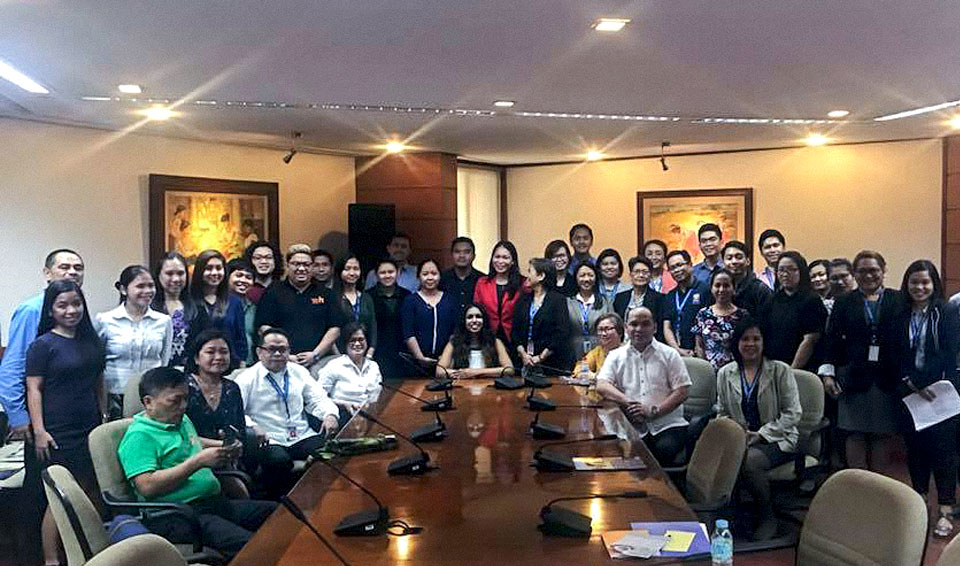
Ria: We use artificial intelligence to predict weather and climate patterns. I was always active in this field and was curious where it would go. We began our research and development around 2008. Once we felt we had a strong platform with a real predictive edge, we released it to the market. Everyone that used it told us, “Wow! This is better than anything else out there.”
Only 3 years later, we were rated as the number one data source in the world. This wasn’t only for weather data. This was for data in general! Many other companies invested billions trying to achieve this. We were competing in that league with a small operation of 7 people. Later in 2017, we received the award for number one climate technology platform.
All this was recognition for the effort we put in. Much of the work we did in our models had never been done before. It was untraditional. But that’s the beauty of being an entrepreneur. You have the liberty to experiment. To see what works and what doesn’t work.
The evolution of intelligent technologies and advanced computing helped us do things that were once ideas. Data mining allowed us to make some real scientific discoveries. It’s helped us challenge assumptions and further our understanding of science. This is because we can now see relationships we couldn’t see before.
Ria: I was a part of the Mars Pathfinder project at NASA. A groundbreaking project at the time because we’d never been to Mars before. I was responsible for calculating orbits and orbital dynamics.
This is a crucial task because there’s a lot of orbital debris and congested space environments. You don’t want a rocket to crash into this debris. But it’s a very complex task calculating orbits and orbital dynamics. So, we utilized high-performance computers for these calculations. Without the use of such computers, I don’t think we can achieve the goals of any space program.
Ria: A traditional Chamber of Commerce helps businesses connect with partners and customers. But intelligence-driven enterprises have some very unique needs. Many such companies have great innovations but have trouble connecting with their markets and making money. So, we felt that the Chamber of Commerce needed to be customized.
At the European Chamber of Digital Commerce, we support digital companies from the point of across the innovation lifecycle. There’s a giant chasm between those two points. It used to take 30 years before innovations hit the market. Today, with the right support, intelligence-driven innovations can reach the market much faster.
We aim to provide that support. This is through our programs, consultancies, and events aimed at ecosystem connectivity. We believe the key is those connections. It’s very important to me that scientists and engineers can make money from their innovations.
Ria: That’s something we see in the blockchain space. It’s a transformative emerging technology that’s going to change the way we do business in several industries. But there are challenges. You have engineers with solutions. But their potential customers like banks struggle to understand how it’ll benefit them.
There are barriers and challenges on both sides. The engineers need to understand the needs of the banks. The banks need to understand how new technologies will benefit them. Both sides need to come together and talk. Otherwise, everyone is in a vacuum and no one’s getting anywhere.
That’s why our activities at the European Chamber of Digital Commerce are focused on engagement. It’s so that these parties can meet and understand each other. We aim to be the central place where people can receive information on both ends.
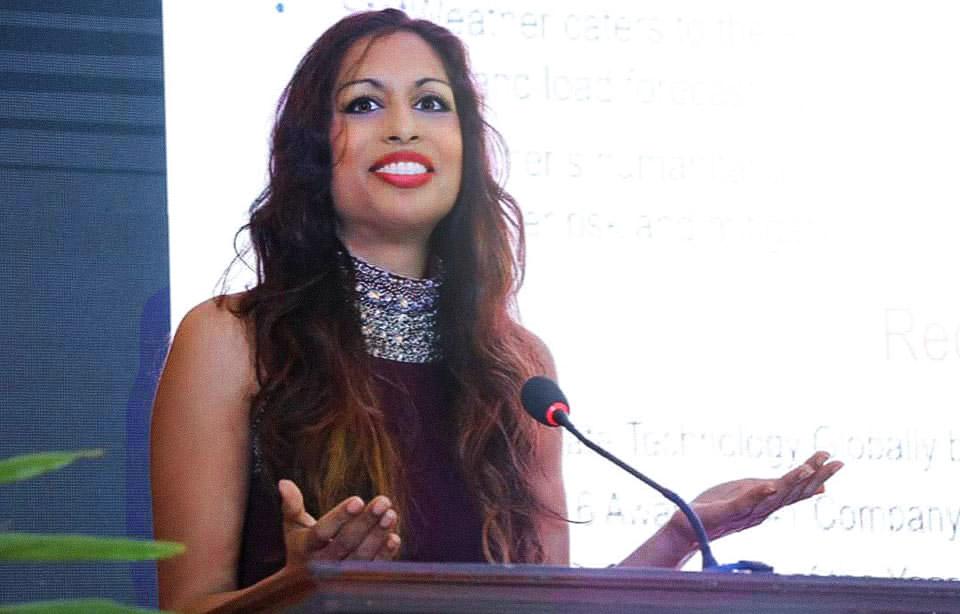
Ria: The digital future boardroom is a series of events we have planned at CNNMoney in Zurich, Switzerland. Through this event, we bring people together to discuss different issues. For example, to discuss blockchain, we brought engineers and bankers together. Both parties could then discuss the issues they face.
The digital future magazine is another initiative for our members to contribute their insights into the issues they face. So, we can start more discussions between the community in an informational format. By sharing these insights, the entire community can benefit as a whole.
Ria: The European Chamber of Digital Commerce is an initiative of the Swiss Chamber of Commerce in the Netherlands. What they found is that companies operating in the intelligence economy have special needs. Hence, they founded this initiative. It’s not exclusively for companies in Europe either.
When you launch a data-driven solution online, you have a global reach. So, you could be a company outside Europe looking to enter the European market. You can use the services of the European Digital Chamber of Commerce to help you gain global reach and with your intelligence strategy.
Ria: We’ve started virtual forums, hybrid engagements, digitally enabled collaboration sessions. But it should also be noted that when we have events like those at CNNMoney they’re televised. Those events are streamed across ecosystems as well. It’s not simply aired on television. It’s also being streamed across connected platforms. So even conventional media has become a way for us to create interactive engagement with people.
Ria: I was selected because of my technical expertise and my skill in intelligent systems. The European Digital Chamber of Commerce wanted to bring in a specialist. One that would lead the charge for the intelligence era.
Ria: I want people to know that startups and large enterprises face the same issues. It’s just on a different scale. The fundamental issue of how can I get my customers to use and buy my services? It’s not a challenge only for startups. Large companies are also facing these challenges in today’s intelligence economy. So, we’re all in the same boat.