

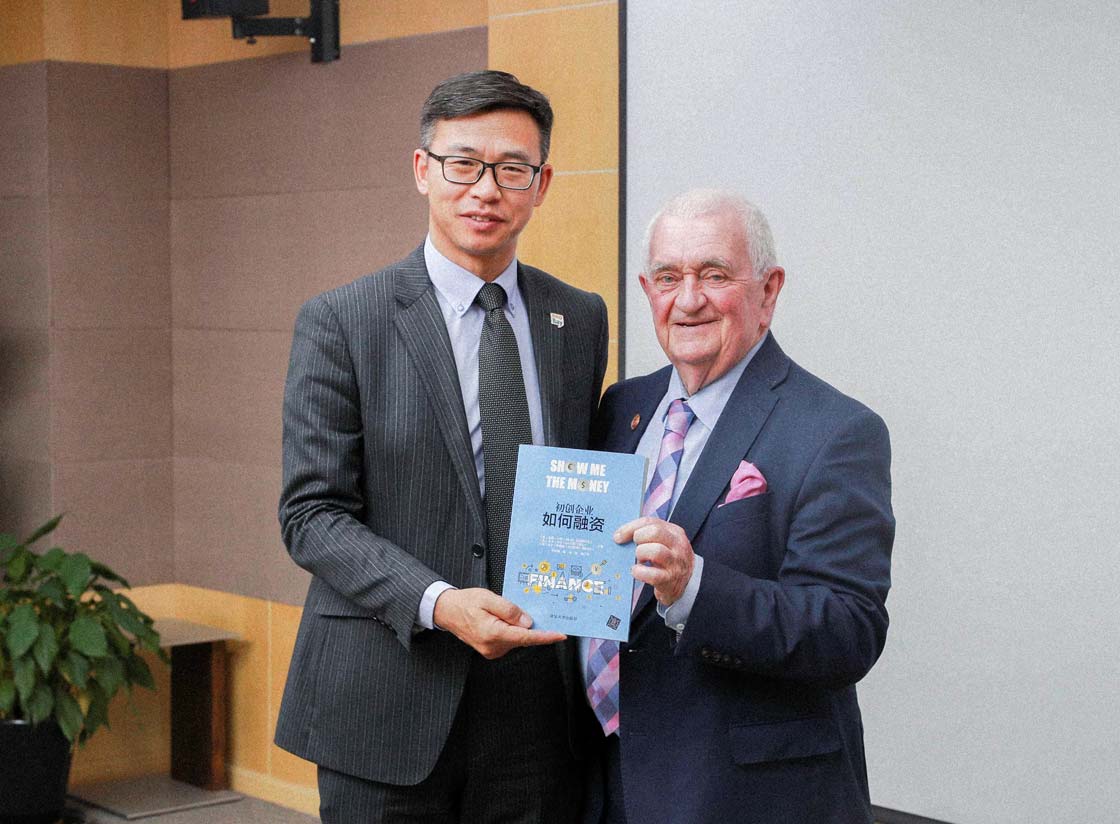
For 5 decades, Alan Barrell has played an active role in leading conglomerates and startups and now is one of Cambridge’s most articulate promoters of entrepreneurship. As a teacher, he has taught countless students in the UK, Europe, North America, and Asia. Recently, Aspirations Intelligence met Alan to explore the future of intelligence, innovation ecosystems, and cross-border collaboration between East and West.
Alan: I’m in my 80th year of life. I was born in 1940 and always wanted to work in medicine. I became a biomedical scientist and worked in the NHS. After 6 or 7 years I joined the healthcare industry.
I worked in a variety of roles and went up to be a managing director for Baxter Healthcare looking over a large part of its operations globally. Afterward, I moved into the electronics sector and then chose to become an angel investor. I also started teaching and got involved in China, the Baltic States, and other European countries. Entrepreneurship and innovation have become the center of everything I do in my life at the moment. My main focus is on China. I work to connect Chinese innovation ecosystems with those in the UK to facilitate collaboration, research commercialization, and cross-border knowledge transfer. I have also done this in other countries such as Estonia, Latvia, Portugal, and Spain.
In other words, I support transforming research into real-world impact by nurturing early-stage ventures, innovation-led companies, and investment ecosystems. The two big things in my life right now are innovation and starting up new companies to help build bridges between East and West through education and investment.
Alan: This summer I will teach probably more than 1,000 undergraduates. They always agree with me that the progress we’ve seen in innovation, entrepreneurship, and global collaboration wouldn’t have happened without the Internet. They all agree that the Internet is the most important invention of humankind in modern times.
However, when I show them a picture of Sir Tim Berners Lee, they don’t know who he is! He created the internet simply to help him with his work. Young people should think about that and how they can best utilize it. In the 500 years between books and the internet, there’s been tremendous progress. Things are moving dramatically fast.
Take Artificial Intelligence and intelligent systems as an example. Alan Turing was talking about it over 60 years ago! Today it’s more sophisticated and allows us to do amazing things. The Internet, intelligent technologies, and connected digital systems are reshaping the way we work, live, learn, and interact as a society. We have to be ready for a world of continuing change.
We’re living in a transformative period in human history because of intelligent systems, scientific advancement, and global connectivity. Yet, we do have challenges. For example, the population of the planet has doubled in my lifetime. There are 7.5 billion people on the planet now. There are challenges like food security, clean water, climate change, and more.
So, I encourage my students to think about how they can apply innovation, intelligence, and emerging technologies to solve real-world challenges. They’re entering a world of opportunities. To make the most of it requires resourcefulness, intellectual capability, and energy.
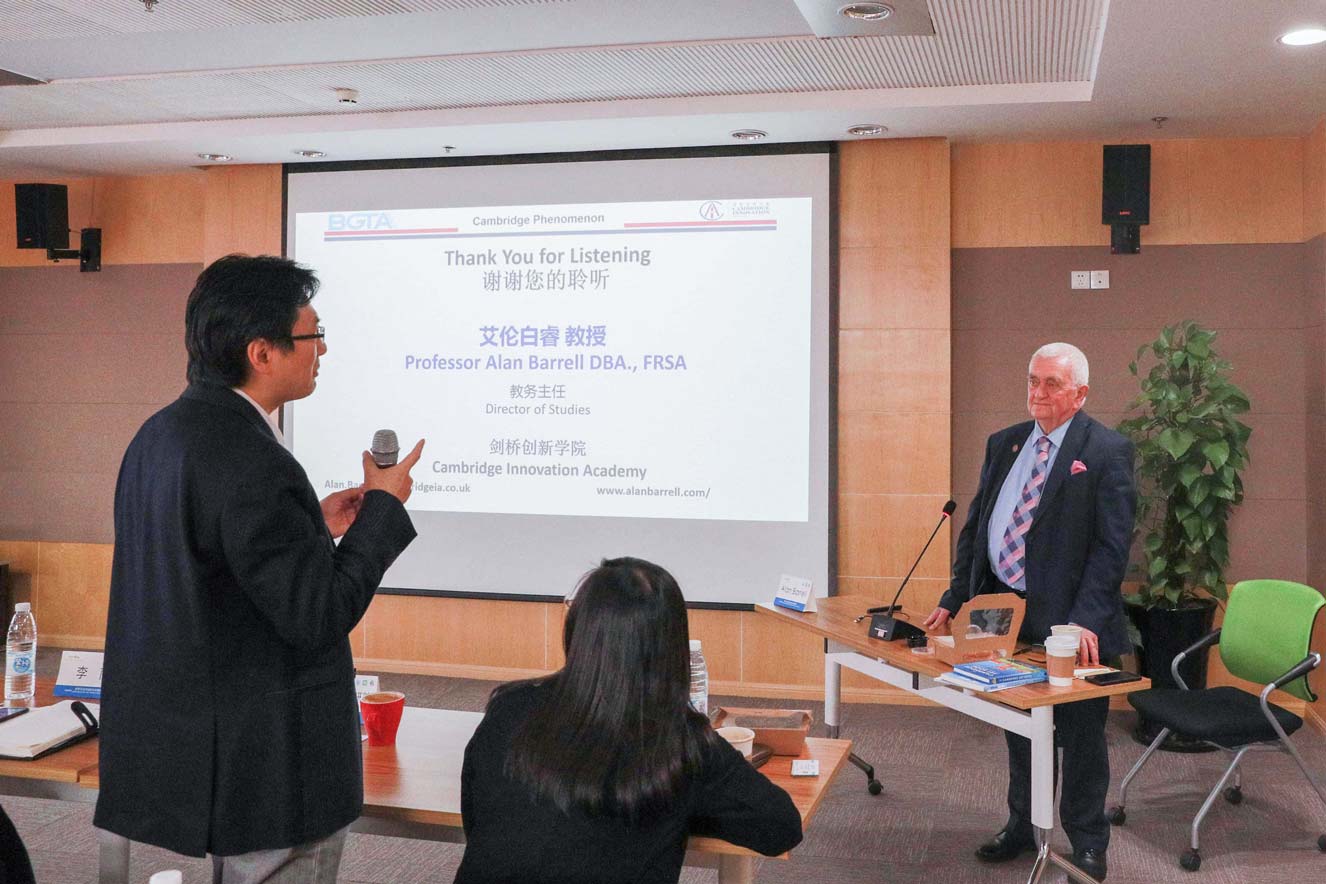
Alan: I feel intelligence-driven healthcare has been thought of too narrowly. It’s not simply digital patient records, their appointments, and managing hospitals. It can actually give us a deep understanding of human health. Thanks to advances in intelligent systems and computing, we can now characterize the human genome in just 15 minutes.
However, this generates a lot of data. So, we need predictive systems and intelligent analytics that can help us understand the data. So intelligent healthcare systems are broad in their potential. It goes all the way from diagnosis to treatment. Even into precision medicine and treatment quality, such as robotic-assisted surgery. Intelligent health technologies are becoming pervasive across modern healthcare.
However, I don’t think we have imagined what we can do with intelligent healthcare systems. We’ve merely tinkered with it. We can do amazing things. Nevertheless, we’ve only begun to tip into the edges of its vast potential right now.
Imagine if for every human being or “patient” if all available information about that being’s health and wellness was on file and could be drawn down by the doctor, nurse or pharmacist where and when they need it to help the patient! Information and Data is only helpful if accessible.
Alan: My first experience working in China was back in 1990. The electronics company I was leading at the time made the decision to set up a subsidiary there. I was the chairman of a Chinese company even though I didn’t speak the language!
To succeed in China, you need to understand the local business culture and innovation ecosystem. You need to respect that they think differently. If you take Chinese businesses like Huawei, they have different business models compared to Western companies. What many international companies do when entering new markets is trying to implant their existing culture and philosophy.
Instead, I decided to build a Chinese company. So, I hired a lot of locals. You need Chinese people to run a Chinese company. I’d do the same if I was building an Indian company or German company. In China, it’s essential to understand the language and culture if you want to succeed.
Afterward, I started teaching in China and working with state-owned enterprises. What I learned is that if you’re doing anything of significance in China, you have to accept that the government will be involved.
In those early days, I learned that it takes time to understand a market and how their innovation ecosystems function. In some aspects, we see China has built more integrated digital ecosystems as seen with their payment systems, online finance, and in many other ways. People also told me that I’d lose my IP in China but that didn’t happen. In fact, China has the best patent system in the world.
In my experience, if you’re a fast-growing but small company, you shouldn’t tackle too many markets. You’ll be overstretched. The electronics company I worked for began its operations in the UK, then expanded into Europe, then North America, and only then into China.
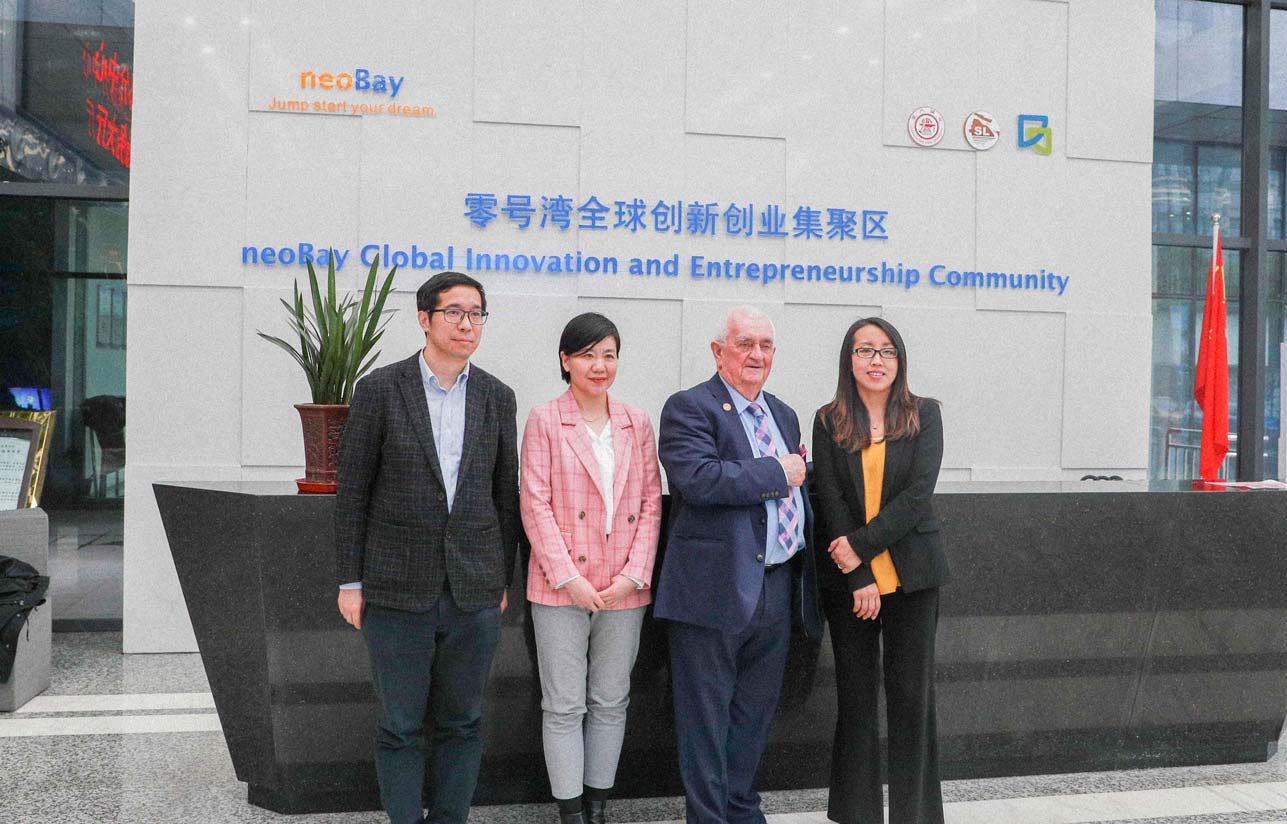
Alan: In my experience, the Chinese people are more connected digitally. When I talk about the Internet, let me be clear, I’m talking about the entire interconnected information and communication infrastructure. So even a mobile phone is part of the Internet. In China, we’re seeing the evolution of telecommunications with the Internet.
Another area China uses the Internet differently is social media. Everyone uses WeChat in China. All you have to do is exchange barcodes and you’ll experience information and transactions moving instantly, quite unlike in the West.
Also, its application has exploded. There’s no need for cash or credit cards when making payments in China. In fact, only 7% of Chinese have a credit card. Instead, everyone uses mobile-first payment ecosystems to make their payments. Even beggars carry phones to collect your money.
This is because they built integrated platforms for digital payments, credit scoring, and risk management. The banks were doing a bad job of lending to small companies as they do everywhere. So, entrepreneurs like Jack Ma said, “If the banks won’t change things, then we will!”
Another area China uses the internet different is social media. Everyone uses WeChat in China. All you have to do is exchange barcodes and you’ll see information traveling very quickly, quite unlike in the West. They’re also very sophisticated users of data ecosystems. We have companies in the West that do the same as Facebook. Yet, the Chinese have developed more integrated and integrated digital ecosystems. You can see this in marketing where companies communicate with customers in far more personalized and data-driven ways.
Alan: People have written a lot about networks. I believe a network consists of companies, research institutions, and stakeholders who are working towards and defined by a set of common interests. However, a network is not always active. So, what I’ve promoted strongly is ecosystems rather than networks. For example, Cambridge’s contribution to the United Kingdom’s economy helps it by exceeding 8% this year. And the growth here will continue.
This growth is not simply the result of new companies being born and new technologies reaching the marketplace. There’s an ecosystem of companies, universities, investors, and the government. All of them are closely connected and collaborative, “joined-up”. However, simply being connected won’t generate activity. You need a lot of constant energy to make things happen like electricity. That’s where the name concentricity came from.
Now the beautiful part of growing old is that you will be a part of many networks. However, you can’t activate all of them by yourself. So I work to connect people and enable them to do something. That’s what connectricity is. Digital infrastructure and connected technologies are what make this possible. Computers made this possible.
Yet, computers cannot replace human activity. In Cambridge, you see a lot of energy being put into the growth of the ecosystem. As a result, there’s a lot more investment. It’s not just local companies anymore. You have global giants like Huawei setting up research centers here. It’s because the local ecosystem is so vibrant!
There have been many industrial revolutions. The first was mechanization. The second was automation. The third industrial revolution was driven by computing, digital technologies, and global connectivity. But that alone is not enough. The next era is about connected ecosystems , collaborative ecosystems, and “connectricity”.
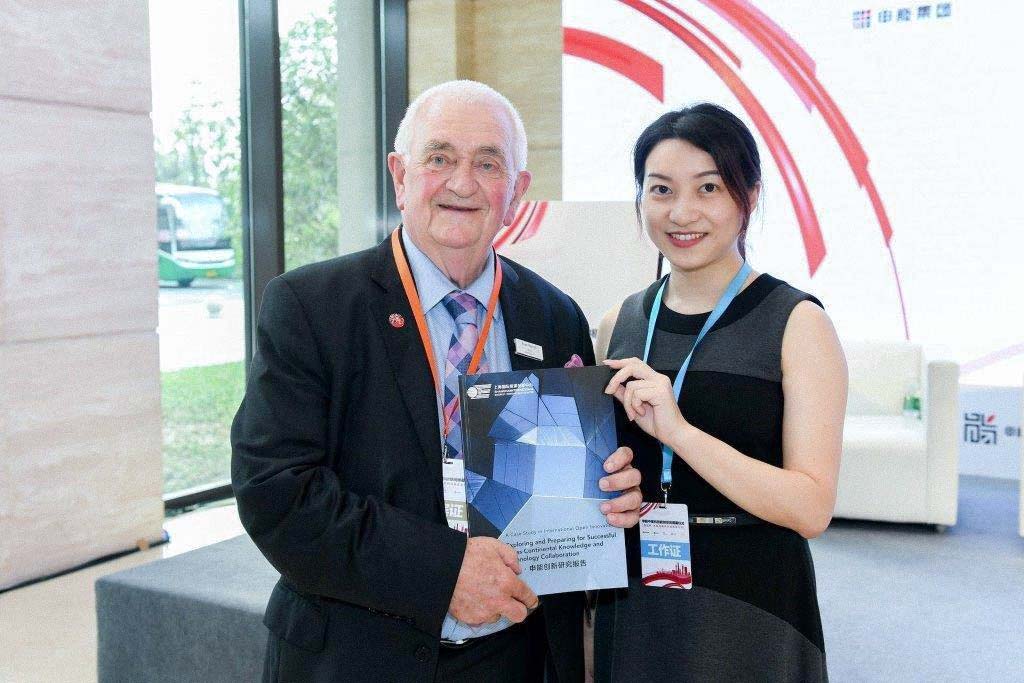
Alan: A key factor of Cambridge’s success has been the acceptance of open innovation and the willingness to share knowledge. This was not the case 15 years ago. Knowledge was sealed behind closed doors. We are now living in an increasingly open and collaborative innovation environment.
We could utilize digital technologies and intelligent systems heavily for everything we do. Yet, unless we’re connected with each other, then nothing will happen. It’s also important to remember that innovation is a series of processes. They turn knowledge and research into something tangible. In my knowledge of life, there is a clear distinction between research and innovation.
Research can teach us amazing things, but it costs money. So, unless you can make it into something tangible, it won’t make any money or save lives. I believe this distinction is important. Between both research and innovation, as well as digital infrastructure and ecosystem collaboration. I believe Cambridge has made so much progress because they understood the processes of innovation, which transform research into measurable outcomes.
Alan: A key factor of Cambridge’s success has been the acceptance of open innovation and the willingness to share knowledge. This was not the case 15 years ago. Knowledge was sealed behind closed doors. We are now living in an increasingly open-source world. Innovation is open and people are exchanging information. We see large companies working with smaller companies. They collaborate to build advanced technologies, develop great products faster, and so much more.
Additionally, open innovation enables access to tacit knowledge. This is the knowledge in my head and your head that we never wrote down. We learned it from experience. You can’t find it in any book. So, we could be having a cup of coffee, and you could tell me of a problem you’re having. I’m from a completely different field of knowledge. Nevertheless, once I understand your problem, I could give you a solution from a fresh perspective.
The exchange of tacit knowledge happens when you find open innovation and good intermingling of people. You see this in the Cambridge and Oxford College systems. Every night in the dining room, you’ll find people studying different things. Physics, economics, French, German, and more. So, you have networking and intermingling of people.
Thanks to technology, you no longer need to be in the same room to do this. We can have webinars to exchange knowledge. You don’t need to board a flight to Dubai and be in the same room. This exchange of tacit knowledge due to open innovation results in more vibrant economies.
So we’re living in an age of amazing technology. We have intelligence systems, telecommunications, biotechnology, nanotechnology, and so much more. All of these technologies are now converging. You can’t do genomic experiments without powerful computing technologies.
Remember that one of the most important discoveries in biology, the double helix of DNA, was in a physics lab! This convergence of intelligence driven systems is why Cambridge has a lab for Physics and Medicine. The Internet of Things is another example. This is where a streetlight in Shanghai can be controlled without a human. The Internet of Things is the use of sensors and information to enable automated action without human intervention.
Recently, I gave a talk in Portugal. I met a group of people who wanted to restart a tradition from Ancient Greece. This is the Agora, which is a meeting of people. It was at Agora’s that Socrates and other thinkers met to develop scientific theories. Now when I look at Cambridge, I see an Agora.
Today, the Internet is an online Agora where you can be anywhere. Recently, I was at the Oxford China Forum. While I was in Oxford, the event was live streamed to over 850,000 people in China. Innovation and creativity along with the human desire to transform society is a driving force. This human desire is a domino that helps everything else fall into place and connected technologies enable it.
Alan: Artificial Intelligence is popular today because we have more data than we ever imagined. The human genome creates a ton of data. Similarly, we have financial data, statistical data, and so much more. We have cloud computing infrastructure that can store all this data. However, we’ve fallen short on analyzing all this data because data isn’t information.
Data is raw. To make data usable, we have to analyze it. For that, we need not only powerful computers but machines that can analyze this data. Humans simply don’t have the time for it. So we’re developing intelligent systems capable of identifying patterns and making predictions using all this data, without us sitting in front of a keyboard. That’s how I see AI.
I see its role in genomics where AI and machine learning are useful tools to understand vast amounts of data. Yet, they’re not taking over the way we think or plan. It’s still us programming computers to do something the way we want them to. The computers can then be connected to robotics, automation systems, and other intelligent technologies, that can act on the information as a result of the data analysis.
When we go back to DNA, I believe innovation is the DNA of human progress. It leads us to make things better, to make things different to make them more efficient. That’s how we know where to best channel our intelligence, including Artificial Intelligence.
Yet, in these discussions, sometimes we forget to mention entrepreneurial thinking. An entrepreneur isn’t simply someone who starts a company to make money. It’s about thinking out of the box. People like Bill Gates have these groundbreaking ideas. When people tell them it won’t work, they ask, “Why not? Why not people change the world!”
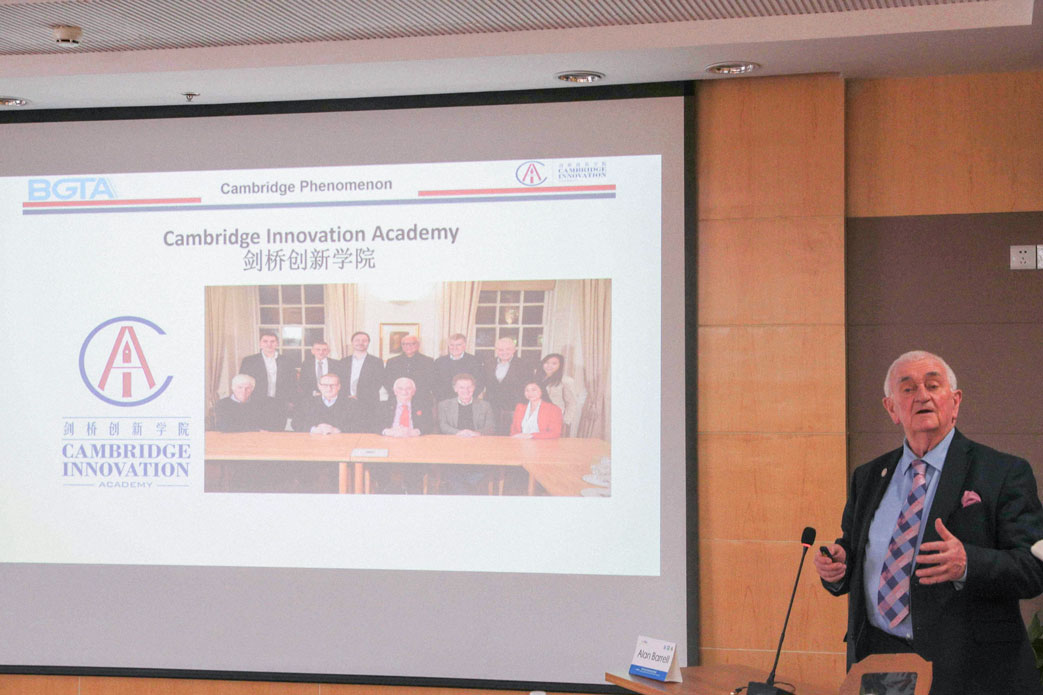
Alan: Personally, I use video a lot. I have a series of simple educational videos. I believe for communication and teaching, video is underused. It should be used much more widely. It has dramatic possibilities for clarifying complex information. It can transcend borders. All you need is to add subtitles and it’s accessible in another language. It’s a universal format to capture and share information through connected media platforms.
Alan: When it comes to China, it’s important to understand Yin Yang thinking. It’s based on old-style Confucianism. It’s about holistic thinking, connectedness, contacts, and connections. Yin means feminine. Yang means masculine. They’re opposites but not total opposites. So it enables the existence and collaboration of opposites.
Whereas Western thinking encourages unanimous thinking. That’s why in China, you can be in opposition to something but still find a way to work together. It’s a different way of thinking than we have here. You need to learn how to speak Chinese. You must understand the culture as well. So you need the right people who have a deep understanding of Chinese culture that can help you.
Alan: The Communist Party of China runs the country. It’s the longest surviving political party in the recent history of man. For the West, it’s not all good but it is what it is. Now you have to remember that China is not one country. It has 31 large provinces. Some are larger than countries in Europe. Sichuan province, for example, has 90 million people. The entire population of China is 4 times that of Europe.
So, you have the national government but also strong municipal governments. If you’re running a business in China, you will be subject to one or more levels of government. It can be supportive if they want you. But you still need to know the right people and know how they think or have someone that knows how they think. Additionally, the public-private partnership approach is complicated in China. So you need people who understand it and help you put it all together.
Alan: My advice is don’t try to do business in China until you’re ready. Early-stage companies are not ready for China. You should have a base in your home country first before you even think about doing business elsewhere. If you don’t have financial security then how can you confidently go to another country?
So before you choose to go to China, do your research. Understand the market, the people, their community, their ego, and everything else. If your company is an established one, then expand into another country and then explore the opportunity in China. Most importantly, find the right people. You won’t make any progress without Chinese partners.
Alan: The era of intelligent systems has given us platforms for global collaboration and the seamless exchange of knowledge, ideas, and innovation. It enables the connectedness and connectricity that I spoke of to become a reality. As a result, we see the acceptance of open innovation and the willingness to share knowledge. This includes the sharing of tacit knowledge that’s not written anywhere. In turn, we see the birth of vibrant economies.
Alan: I believe digital approaches can disrupt and completely redesign the way we do things. We see this in banking, music, photography, and many other industries. In 1974, an engineer at Kodak developed the first digital camera. Yet, the management didn’t want to commercialize it. They were afraid of not being able to sell rolls of film.
Kodak doesn’t exist today. With my smartphone, I can take a photograph without any cost. In the old Kodak days, you needed to be a specialist photographer. Now my 4-year-old